Friday, 6 January 2023

Dominican Republic - Three Eyes and Three Strikes

December 28-29


Hello everyone!


The last blog focused on Santo Domingo’s history and interconnectedness with Christopher Columbus. He is important, but he isn’t everything here - don’t think he ever played baseball, for example…


Crouching Tiger, Crazy Welshman?

Watching a baseball game at Estadio Quisqueya

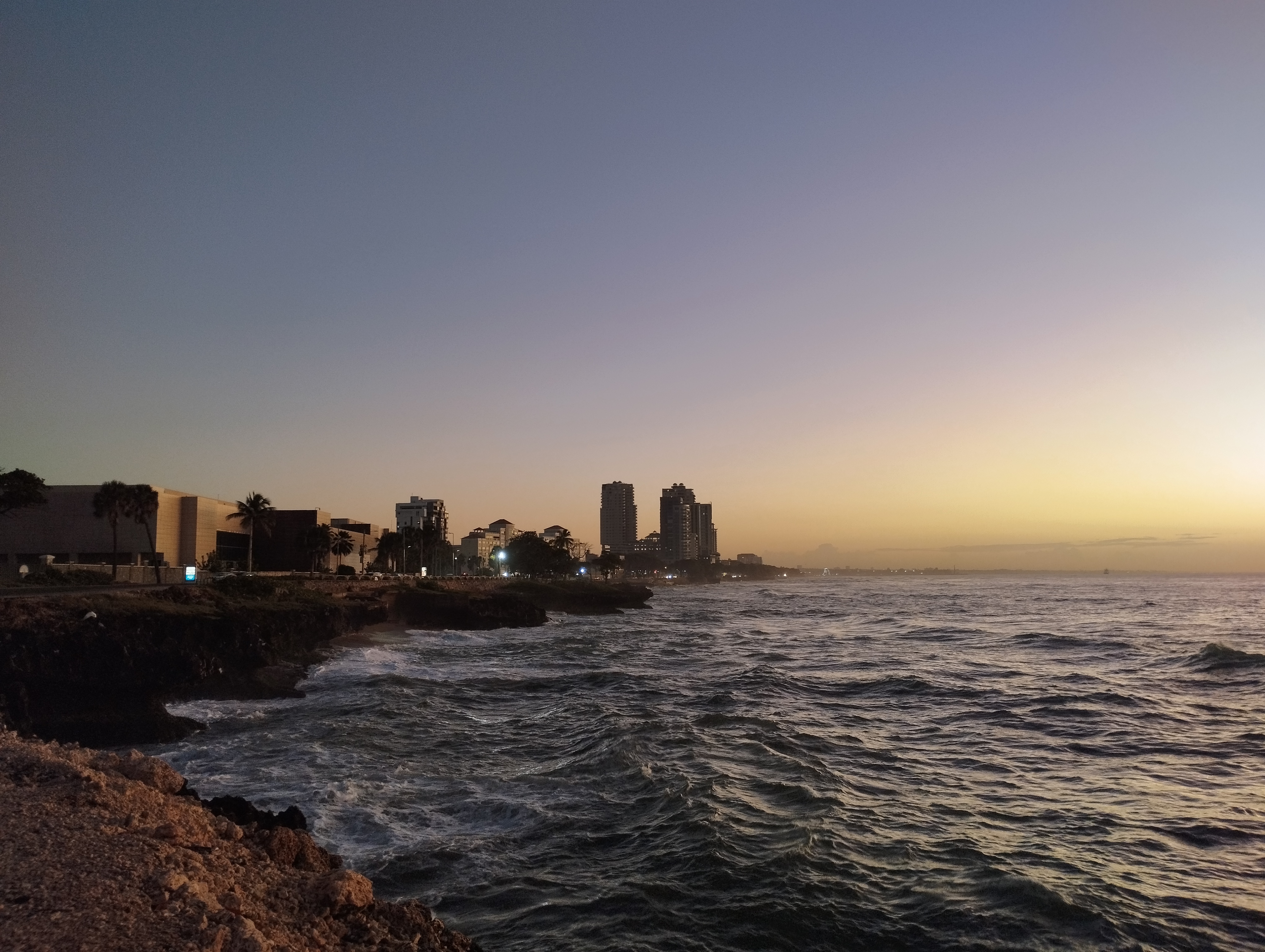
There is a degree of Americana about Santo Domingo. Casinos litter and clutter the Malecon, the boulevard which separates the city from the sea. Like El Salvador, American fast food joints are ubiquitous (this must be how Wendy’s stays viable as a business). With different leaders on the island next door, this could have easily been the alternate reality for Cuba. 

View of the Malecon on my sunrise run

Going more local, I had empanadas one evening. From
the vegetarian menu, I had mozzerella, basil and tomato.
When it came, the main ingredient was...ham.

Another American import is beisbol. There’s also a Cuban connection to the rapid growth of ‘America’s pastime’ in the DR. When Cuban plantation owners fled their own country following skirmishes in 1868, they brought their passion for the sport with them. Baseball teams were set up initially as a way of occupying men outside of working hours. 

The league winners compete in the Caribbean Series,
a sort of 'Champions League' for the region

The season runs from October to January

Like football in many other countries, baseball is seen as a route out of poverty in the DR. The dream is to make it to Major League Baseball (MLB) in the United States. At the start of this season, 99 Dominicans were on rosters of MLB teams, making them by far the highest non-US nationality in the league. Plenty of players from years gone by are now in the MLB Hall of Fame.

Casual baseball fans will know names like Abert
Pujols, Manny Ramirez and Sammy Sosa

My favourite player growing up played for a team
in Santo Domingo before mving to MLB

One pathway is to be recruited very young and drafted into an academy for a MLB team, which itself has some ethical challenges. The other is to become a standout player in the DR’s domestic league, which has six teams. I was surprised it only has six considering its popularity, but I guess it centralises talent to present a higher-quality product.

The top four in the six team league go into a new league to
decide the overall winners. Not much jeopardy at the start, I'd say.

The logos of the six teams. Gigantes are reigning champs.

I went to one of these games with a German traveller who has never watched baseball before. I tried to explain what was going on whilst watching the Licey Tigers (home team and therefore who we were obliged to support) take on the Estrellas Orientales, which translates as Eastern Stars.

The two Santo Domingo teams both play at Estadio Quisqueya 


The Tigers have won a record 10 Caribbean Series

Explaining what was going on was difficult for a number of reasons. One was that so much was happening. Stolen bases, pitchers accidentally hitting batters, injuries, runs, walks, more runs… All this to a background of chanting and electronic music being blared at awkward moments…like when they were actually trying to hit the ball.

The Stars made quite a few errors, which were lapped up by the crowd


At the end of the third inning of nine, a group with ‘Banda Azul’ written on the back of their T-shirts set up a few rows in front of us. I don’t need to translate if I tell you that each person had an instrument, ranging from what looked like a glockenspiel to an enormous drum, with plenty of long horns in between. Mr Glock must either have been new to the group or been punished for a transgression - there was no point in him playing.


Great entertainment - wished they were a little bit further away!


This added to an entertaining but not particularly intimidating atmosphere. There weren’t really any away fans to intimidate, after all, and the Estrellas seemed intent on self-destruction anyway. One member of the crowd, an older gentleman with a cuddly toy tiger, seemed to enjoy this, as you can see from the end f the video below…


One of many runs being celebrated. It was 7-1 when we left.


The photo at the top of the blog is one I took with him after a brief chat. He brings the tiger - called Tigre, not overly original - to every game. With our scalped tickets costing $7 each and the average household income being $777 a month, I hope he has some sort of season ticket or deal for bringing joy and dancing tigers into the stadium.


The moment where I was on the big screen - it's
very hard to spot me behind the musicians!


We left at the end of the 5th inning as the game had been going on for almost three hours. It was only just over halfway done! Tiredness had struck as it had been a long day which had started relatively early on the other side of town to see a natural film set…


Recognise it from Jurassic Park 3?

Or from Tarzan?


This is the fourth of the Los Tres Ojos: the Three Eyes. Not a typo. The ‘Three Eyes’ contains a fourth lake. I think it’s to do with the fact that the original three are all within and covered by caves.


The caves are about 6 km from Zona Colonial

The rock is limestone

The sinkholes are purported to be about ten thousand years old, created due to the collapse of the ceiling at the end of the Ice Age. The water is from subterranean rivers which is topped up over time by the dripping from the stalactites hovering ominously above. 

I wouldn't want that collapsing on me...

Stairs take you to each 'eye' from a central point

The pictures don’t do justice to the colours or the calm at each of the three. That calm had certainly disappeared by the time we were leaving - getting here to avoid an American influx from cruise ships is highly recommended. Each had something different. One had schools of little fish floating around, another had a different colour due to the shards of light breaking through the foliage at the top.

Some of the lagoons are up to six metres deep

This one is called 'Las Damas' - the ladies. No idea why.


Getting to the fourth lake, where scenes from Tarzan and Jurassic Park 3 were apparently filmed, involves getting on board a boat which is then pulled along a rope by a worker who probably should still be in school. Always up for alternative methods of transport!


It costs 25 pesos - just under half a dollar - for the 30 second trip


Like most places, there is more to Santo Domingo than history. There is also a lot of traffic, a bit of pollution, and what seems like a lot of drinking in parks, but let’s focus on the positives of blue lakes and baseball. Wonderful contrasting experiences inside this bustling, bubbling melting pot of tourism, culture and history.


Love you all,


Matt

Wednesday, 4 January 2023

Dominican Republic - Christopher’s Age of Exploration

December 28-29


Hello everyone!


Until my current trip, I hadn’t left El Salvador since arriving in August. Though you’ll have seen there is lots to explore in the relatively small country, one of the reasons for moving to this side of the world is to traverse around and learn about new places. My first isn’t actually that close but has a direct flight to El Salvador: the Dominican Republic, or DR.


Christopher Columbus: didn't
actually have a ship for a brain

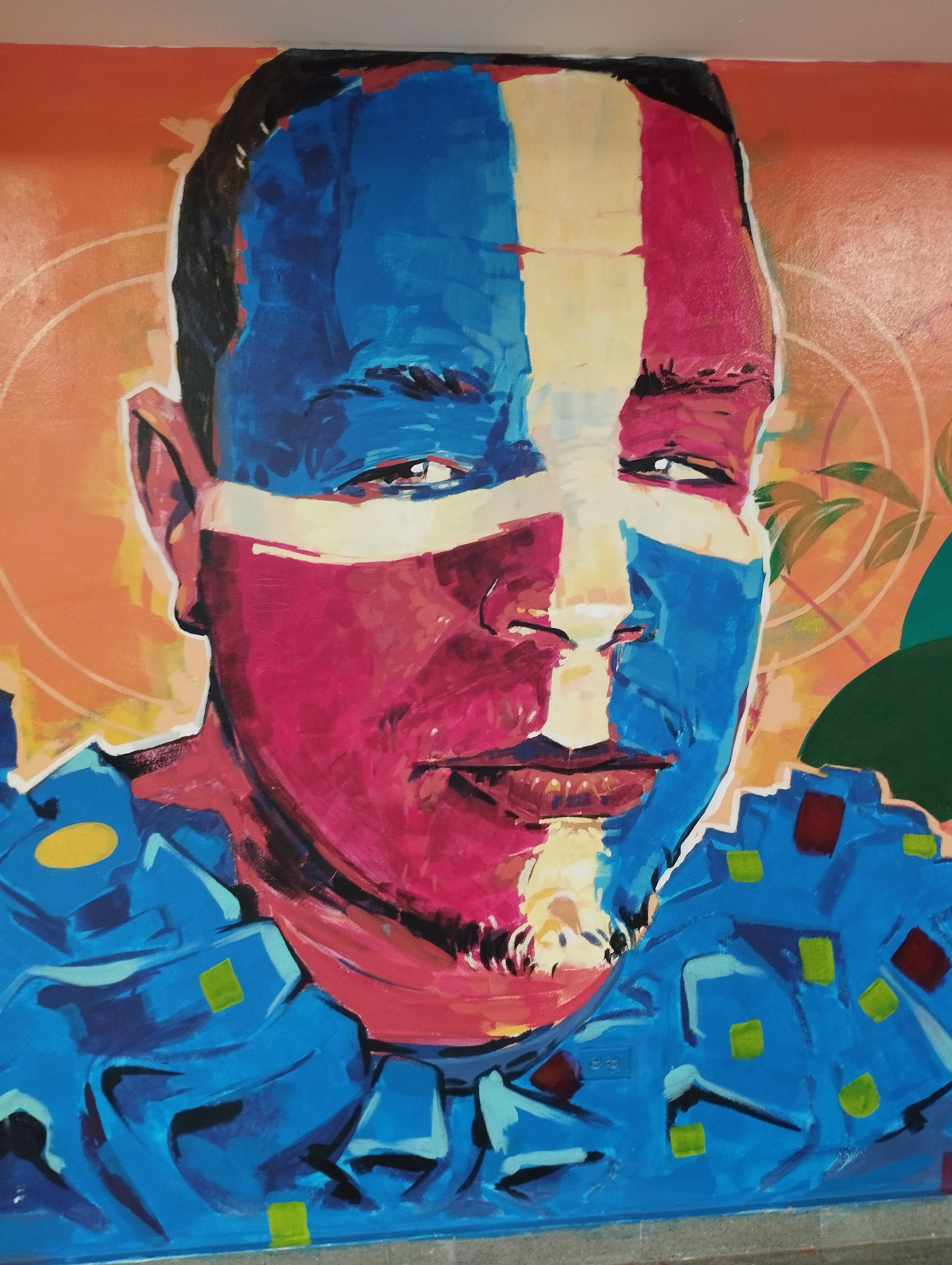
A mural showing a painted DR flag

I didn’t head there straight away, spending the first ten days of my much-needed Christmas holiday in the USA (cold) and Bahamas (warm but often cloudy).

A boat ride on Lake Lanier. Hot chocolate was key.

A conch Christmas tree on Eleuthera, a Bahamian island

We spent an afternoon hanging out with
turtles off the north of the island


Christmas dinner, Caribbean style

Naively, I assumed there would be a direct flight between Nassau and Santo Domingo, two of the larger cities in the Caribbean. Silly me. My route to the capital of the DR thus took me initially to the islands of Turks and Caicos - where a pack of crisps in the airport cost $5 - before heading south to the island of Hispaniola.

The islands are the third largest
British Overseas Territory by population

It makes sense when looking at the map, but there's
actually a time zone difference between
Bahamas and the DR - I didn't realise this

I’m far from the first visitor to this island, which is shared by the DR and Haiti. The first European visitor was someone you may have heard of: Christopher Columbus, who arrived at the island subsequently dubbed Española (the more modern, Anglicised spelling is Hispaniola) in 1492. His third attempt at establishing a settlement, after San Salvador in the Bahamas (originally called Guanahani) and Fuerte de la Navidad on the northern shore of Hispaniola, was Santo Domingo. This is now the capital of the DR and most populated city in the Caribbean.

The original settlement was on the other side of the river

This is a monument to Antonio de Montesinos, a
Spanish friar who denounced slavery and whose actions led
to more tolerance of indigenous peoples on the island

Sunrise in Santo Domingo


One of the stranger things you’ll find here is Faro a Colón, a gargantuan building which looks like it has been parachuted in from the USSR. Technically, it is a lighthouse which produces light in the shape of a cross. I read that making the lights work usually causes a blackout in the rest of the neighbourhood.


It cost about $70 million to construct

The design, from a Scot called Joseph Gleave,
won a competition over 50 years before

Within the walls of this weird building are the remains of Columbus himself. Well, people here say so. Italy and Spain both also claim to be the general’s final resting place. It would be strange for them to be here, considering he died in Spain in 1506…

DNA tests have not been done here. They have in Spain,
which proved their remains belong to Columbus...

A more legitimate piece of history, this is the anchor from the
Santa Maria, Columbus' boat from his maiden voyage in 1492

The walls (you can only access the ground floor, denying a visitor the chance for a panoramic view of the city) also house exhibits donated by a variety of countries. Often these show the connection between that country and the European ‘Age of Exploration’. Other countries, such as China, decided to show pictures of cool, contemporary China. I found the Japanese exhibit interesting as it got me thinking about non-European exploration. We generally receive a Eurocentric, and therefore narrow, view of world history. 

The EU section - the UK has been removed

These masks - Han-Nya and Shikami - are a reminder of
Japanese attempts to make trade agreements in
Mexico with the Spanish in the 17th century

Colonial history abounds here, something which is obviously a sensitive subject at the moment. The fact that there is so much of it in Santo Domingo, particularly the number of buildings in the Zona Colonial, suggests that no one has been sufficiently annoyed here to destroy it. Arguably the closest Santo Domingo has been to destruction was at the hands of a famous seafarer, Sir Francis Drake. After looting the city, he apparently damaged the interior of many buildings and ‘left three-quarters of Santo Domingo in ashes’. Interesting that this is the focal point for anger, rather than the complete obliteration of the pre-Columbian Taino tribe when the Spanish arrived…

A building on Las Damas. From the Casas Realas
down the street, rich women used to throw
oranges out of their windows as 'entertainment'.

Palacio Consistorial, a former mayoral
residence built between 1502 and 1504

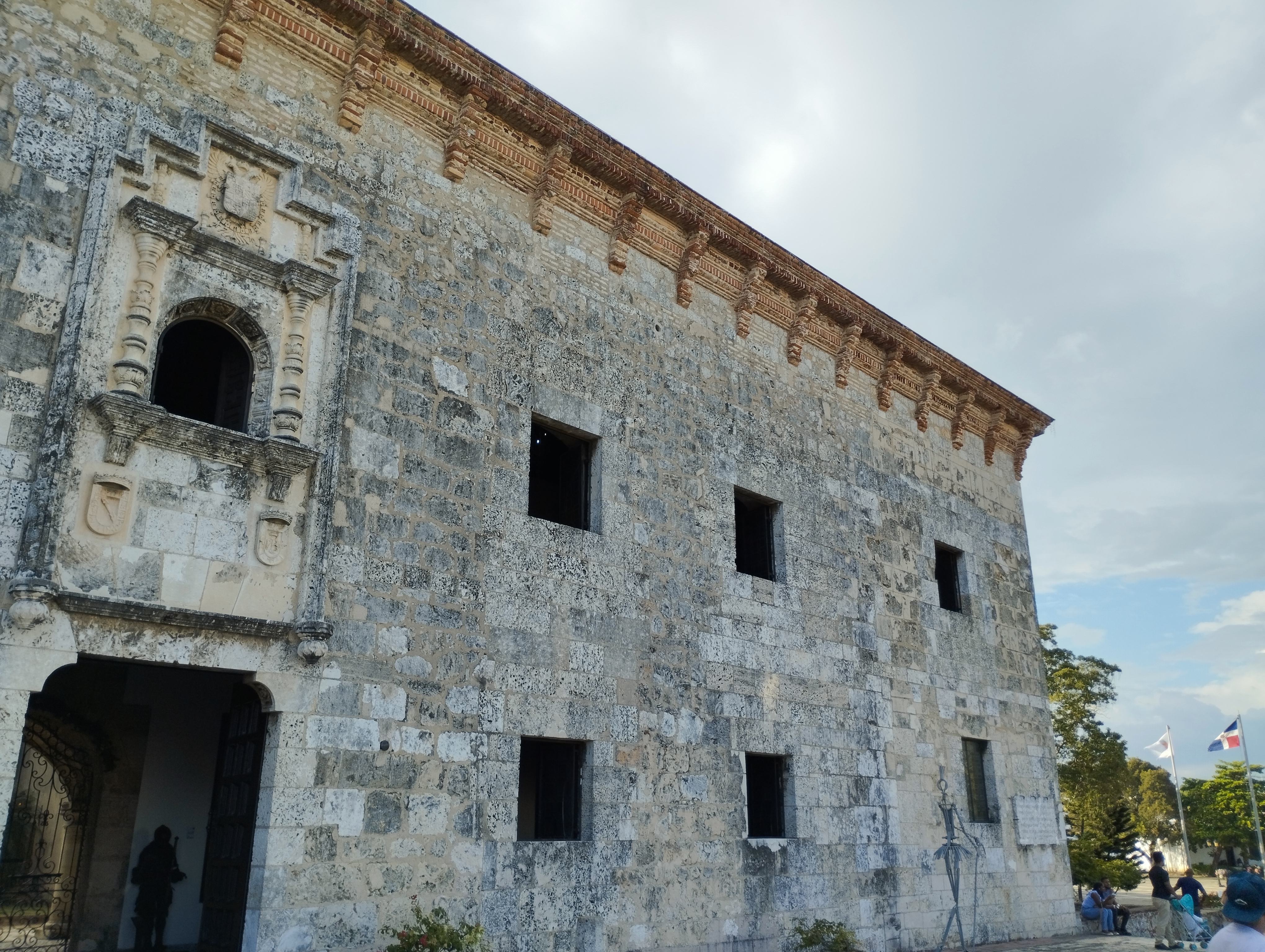
I learnt about this, certainly the feelings of the audioguide, when walking around the Museo de las Casas Reales: the Royal Houses. For a long time, this building was the visual reminder of Spanish rule on the island. It tells a history of Spanish arrival, conquest and subsequent life during the 300 years or so of Spanish rule.

It was first built in 1520

It was briefly home to Colmbus' son and daughter-in-law

Interesting exhibitions included the kitchen area, which had pictures denoting plants and spices as the slaves (called workers but let’s get real) couldn’t read, and a reproduction of the first world map depicting the American continent in 1500. As well as this, it was nice to walk around a cool, tranquil building to seemingly escape the buzz of the nearby streets below.

I could do with a spice rack like this!

A device used by slaves for agriculture

Possibly the most bizarre part of the Casas Realas was added long after independence from Spain was announced in 1821. The collection in the weapons room has little to do with the Dominican Republic, and it was purchased by the former president of the nation: Rafel Leonidas Trujillo. Egotistical and not the nicest of men, Trujillo’s rap sheet includes: 

  • the creation of a ‘death squad’ known as La 42; 

  • the renaming of cities, with Santo Domingo becoming Ciudad Trujillo;

  • sham elections in which he was the only candidate; 

  • the ‘extermination’ of tens of thousands of Haitans in a matter of days in 1937.

Some of these decisions were taken from this building as he decided to use it as his office. Like I said, egotistical.


Swords. Probably not used in the DR.

Trujillo was assassinated in 1961

I’ll tap into more modern Dominican rhythms in the next blog but historical tourism of the Zona Colonial is undoubtedly one way of keeping the pesos rolling in for reinvestment. Other significant sites include what is argued to be (it isn’t) the first cathedral built in the Americas. It is over 500 years old, which is impressive in itself, and is the oldest still standing.

The building behind was erected 500 years ago.
The tree in front...500 hours ago?

The first stone was placed in 1514 but it wasn't
finished until 1540, by which time there was already
a functioning cathedral in Mexico City. 

In front of this, in Parque Colón, is a statue of…you’ve guessed it.

A precariously perched pigeon on his finger

However you feel about his exploration and subsequent appropriation, Columbus dominates Santo Domingo, over 520 years after his first arrival. Its subsequent expansion, history and current standing is in no small part due to this Italian explorer. Whether buried here or not, Christopher Colmbus left an obvious mark on the area which Dominicans now proudly proclaim as their capital.


Love you all,


Matt