December 12-14
Ola! As part of Operation Christmas Surprise, I needed a
place to hang around for 10 days or so before heading off to the Bahamas. This
has given me the opportunity to visit a place in the Caribbean which is quite
different to the other islands: Cuba.
 |
| One of many Chevrolets from the 1950s which still glide through the city of Havana |
 |
| Hotel Nacional in Havana, where Frank Sinatra and many mafia members stayed in the 1950s |
Cuba has long fascinated me, ever since learning all about
the Missile Crisis when I studied history at school. For a relatively small
island, it is filled to the brim with history and its story is fascinating. A
publisher of fiction would probably throw your tale of Cuban history into the
bin, saying it is too far-fetched to be believed.
 |
| Cuba is 90 miles from Florida |
 |
| A replica (probably) of a part of the U2 spy plane which was shot down by Cuba in 1960 |
I’m also drawn to places which are a bit more of a challenge to enter and explore (Myanmar and Turkmenistan spring to mind). Cuba doesn’t exactly fit that specification…unless you’re American. Though President Obama’s visit in 2014 paved the way for a more promising relationship, the current administration has slightly tightened restrictions. Americans I met in Havana, Cuba’s fascinating capital and my first stop, had often been allowed to come as they had told their government that they were here to ‘help the Cuban people’.
 |
| When he came in 2014, President Obama ate in this restaurant in Centro Habana |
 |
| The US Embassy building is opposite a set of poles, which used to have anti-American flags waving on them |
It wasn’t always like this. A lot of Cuba’s history,
positive and negative, is linked to intervention from its big northern
neighbour. The most positive from a local perspective was America’s first
involvement in 1898 in what is called the Spanish-Cuban-American War. Spain
surrendered, Cuban revolutionaries were martyred and the island became a
Republic four years later.
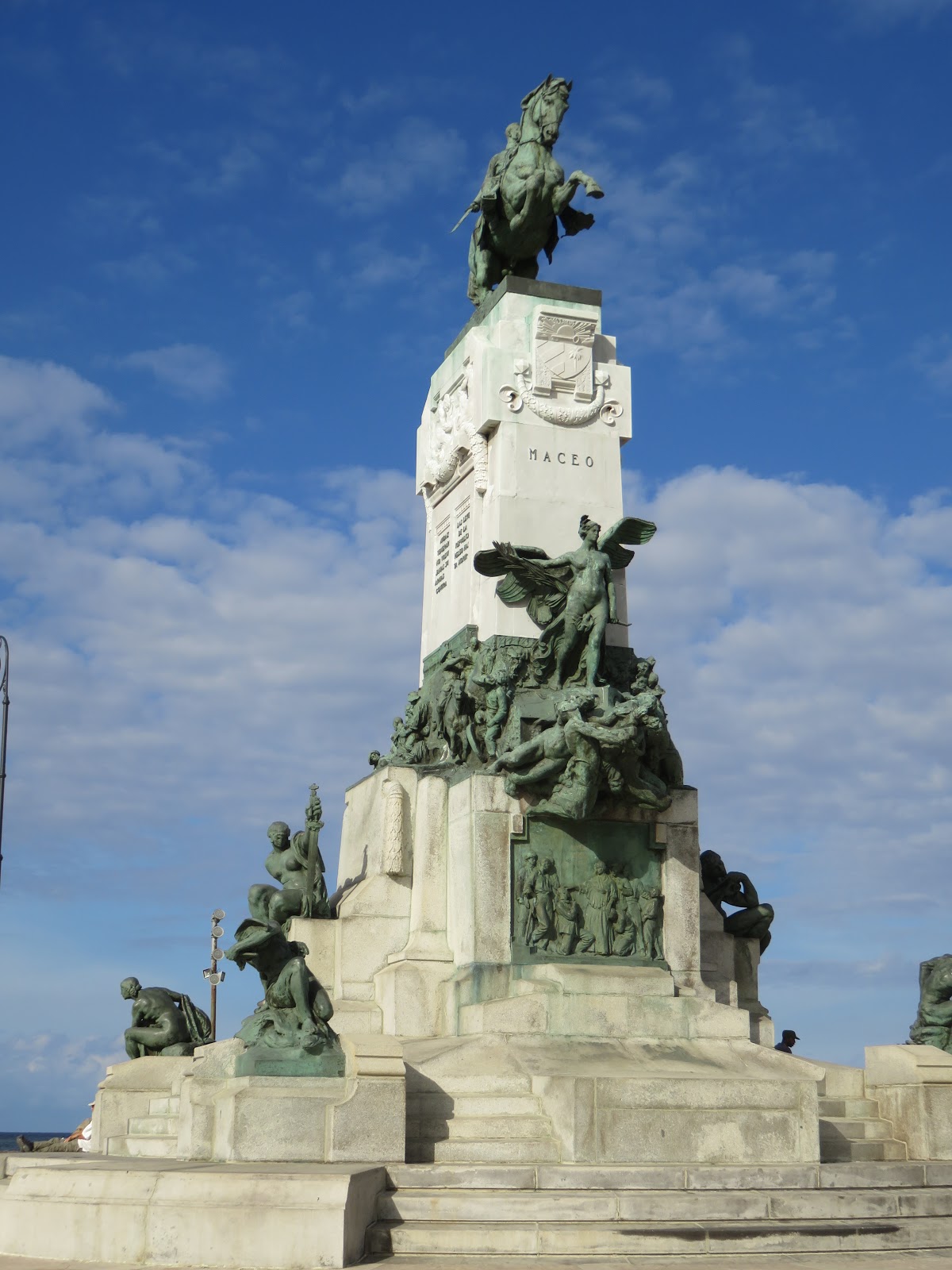 |
| A statue of liberation hero Antonio Maceo |
 |
| Cuba became a republic in 1902 |
Before this, Cuba was under the rule of the Spanish Crown.
Much of Havana has been designed in this architectural style, making the old
quarter (Havana Vieja) a very pleasant area to stroll through in the winter
sunshine.
 |
| Plaza Vieja, ironically not the oldest plaza in the city |
 |
| Plaza de la Catedral |
For the next fifty to sixty years, America heavily
influenced Cuban life. Walking along the Malecon, the beautiful, wide ocean
road in Havana, you can be transported back to a different era. Open-top
Chevrolets of pink, red and blue are omnipresent, whizzing by the grand old
hotels where mafia men from New York, Chicago and New Orleans used to gather
for a grand old time.
 |
| Couples relaxing on the Malecon |
 |
| The Chevrolets without tops were used for tours - Chevrolets with tops are cheaper taxis without suspension |
To many Cubans, however, America merely replaced Spain in
the role of coloniser. Part of the cost for becoming a republic was to have the
option of American intervention enshrined in Cuba’s constitution. The US naval
base on Guantanamo, which has become infamous in the last twenty years, was
created at this time, meaning that America permanently had officers on the
island. In the decades that followed, Cuba became a Caribbean Wild West for
corruption, always at the whim of the US.
 |
| Graffiti on the wall of the Malecon |
 |
| Ernest Hemingway used to stay here |
Revolutionary thoughts flickered and then ignited in the
late 1950s, with the triumph announced on January 1st, 1959. The US
didn’t like this or its leader, Fidel Castro – the stories of assassination
attempts are both numerous and humorous. His chum, an Argentine called Che
Guevara, was also on the naughty list. Che’s face is plastered across Havana
and you can visit his headquarters at Fortaleza de San Carlos de la Cabaña.
 |
| Che - an Argentinian word for 'mate' - is an icon |
 |
| Che Guevara commanded forces from this fort in northern Havana |
Near this is a barracks which shows what Cuba thought of US
actions on the island in the early 1960s. The writing tells of an ‘aggressive
Yankee policy’ and ‘imperialism’s defeat’ at the Bay of Pigs, which I’ll visit
later in my trip. The remnants (possibly replicas) of the U2 spy plane which
was shot down over Cuba are a chilling reminder that actions accompanied this
fiery rhetoric, though thankfully for mankind tensions eased before any big red
button was pressed.
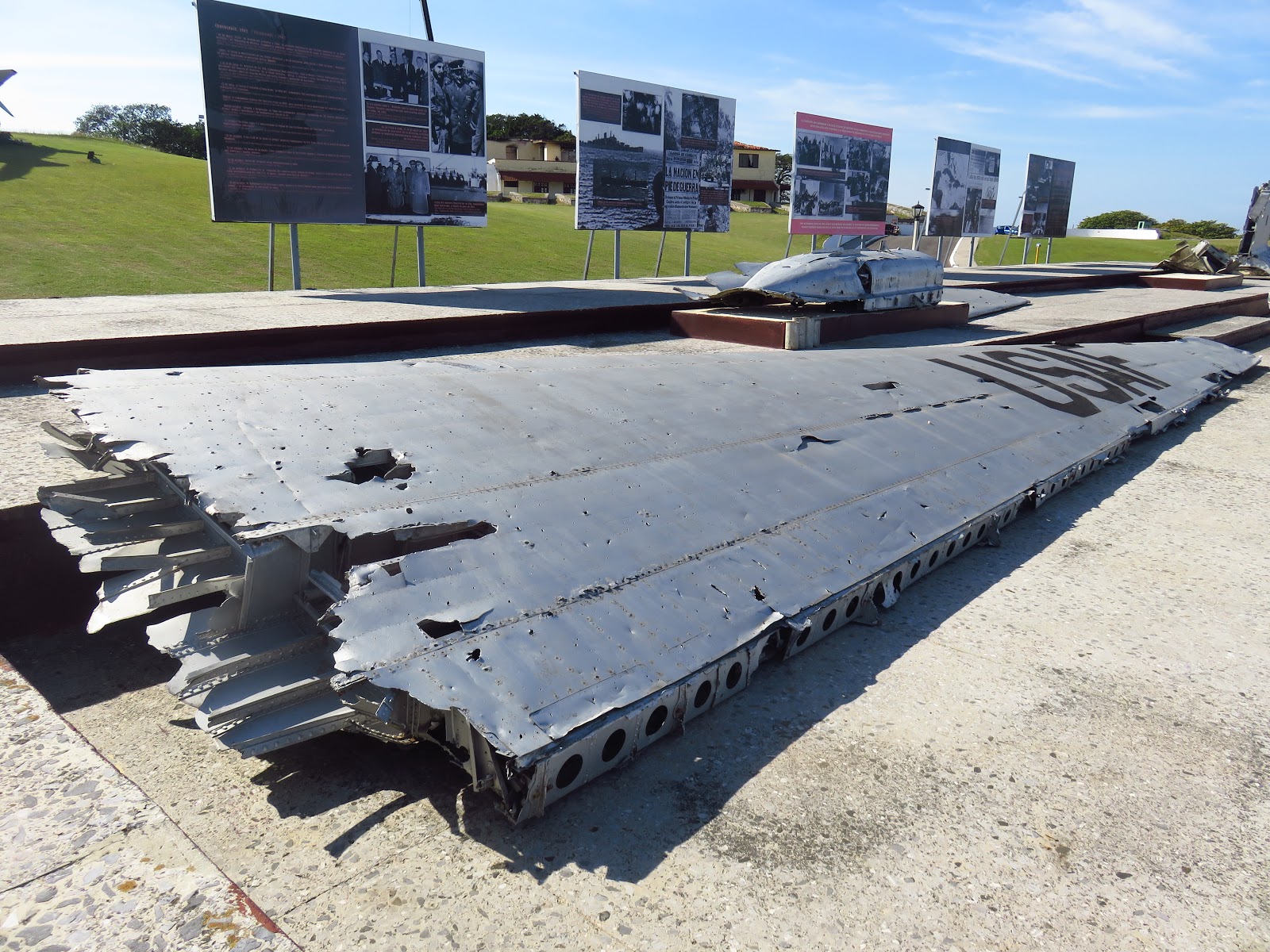 |
| A part of the U2 spy plane |
 |
| An interesting contracdiction between times when Cuba liked and disliked the United States of America |
Soviet influence is visible in the form of some brutalist
buildings and the little Ladas which intersperse the massive Chevrolets on
Havana’s streets. When it collapsed in the early 1990s, it almost dragged Cuba
with it into oblivion.
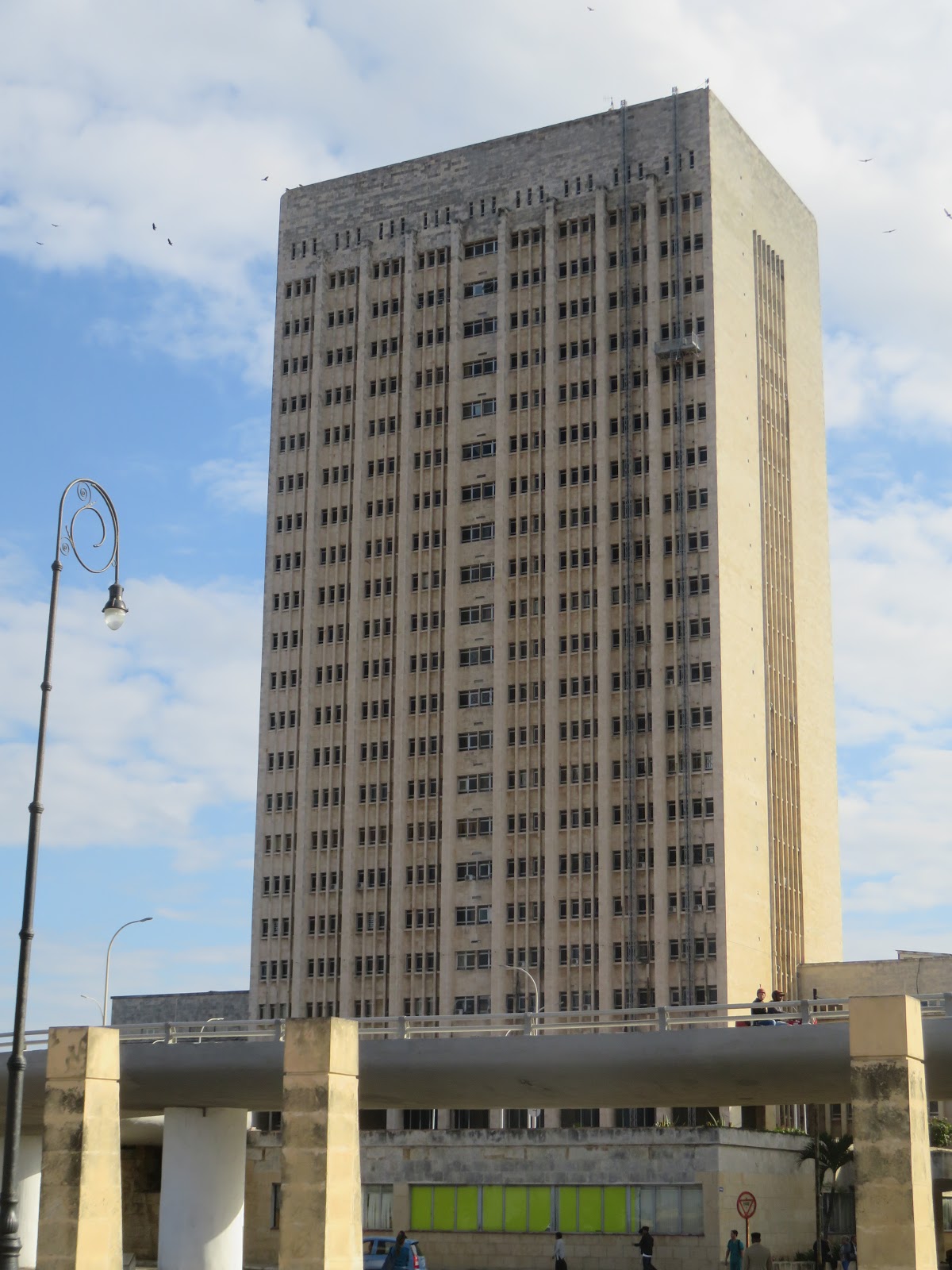 |
| One of Havana's main hospitals, built in the Soviet style |
 |
| A Russian Lada, which is a common feature on Havana's roads |
What Castro called the ‘Special Period’ was a time of
desperation and severe austerity for the island, from which it hasn’t really
recovered. Ration shops still exist; some goods we take for granted in
developed countries don’t. The average wage is about $25 a month, meaning many
take risks selling items on what is dubbed the ‘informal’ market.
 |
| A ration shop - interestingly, rum features prominently next to sugar and flour |
 |
| A pulley system transports goods up to the higher floors of Havana's houses |
A relaxation of some regulations by Fidel’s brother, Raul
Castro, has helped. Cubans are now allowed to sell their car or property. There
are now ‘private’ restaurants in addition to the government versions. It’s very
difficult but Cubans are now allowed to travel abroad, a right we take for
granted but they didn’t have ten years ago. Ultimately, hands are still tied by
an embargo placed on the country by the US a long time ago.
 |
| Many buildings, called 'casa particulares', double up as homestays for visitors |
 |
| Many buildings are in a state of disrepair |
Do Cubans hate Americans for this? Not that I could tell.
Many people wore clothing with the stars and stripes on it, though that may be
just accepting any clothing as it is a relatively expensive purchase here. The
Americans I’m travelling with haven’t had any issue. They have money and have
come to invest it in Cuba and its people – I guess locals are thankful for
that.
 |
| American flags on cars and rickshaws are a common sight |
 |
| A large sign on one of Havana's theatres |
Cuba’s past has been described as turbulent and troubled.
There is no doubt that the people who populate this island – and the many who
fled in the aftermath of the revolution – have had very hard times to survive.
That the spirit and incredible culture, which I will identify in the next blog,
shows the strength of their character. Understanding Cuba’s history will
hopefully help me appreciate the island even more, starting with its beautiful
and fascinating capital.


Love you all,
Matt


