January 2-3
Hello everyone!
When the Spanish arrived in the Americas, they were keen to find treasures to enrich both themselves and their country. The resource they were particularly enamoured by was gold. Colombia, and specifically this area of the country, was a significant area of focus to find gold and the city they called ‘El Dorado’.
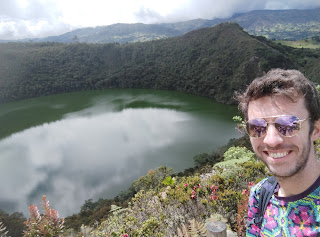 |
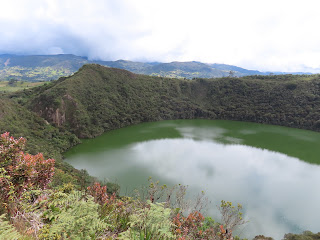
| Lake Guatavita - part of the 'El Dorado' legend |
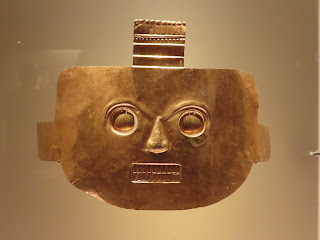 |
| Golden mask in the Museo del Oro |
The history of gold in this region goes back thousands of years. This is expertly charted in the Museo del Oro - The Gold Museum - in the historic central district of Bogotá.
 |
| This necklace would jingle in the wind, apparently showing when spirits were near |
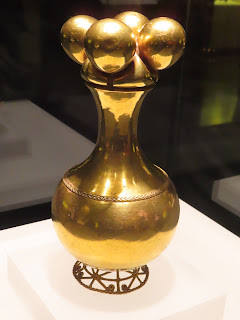 |
This lime container, found in the 19th century, was the
reason for the creation of the Gold Museum in 1939 |
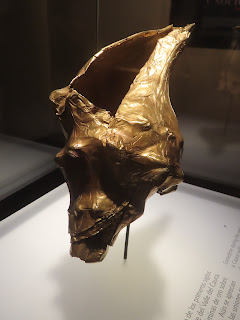
The earliest remains of metal use in South America have been found in the neighbouring countries of Peru and Ecuador, dating from 2100 BC. Gold sheet hammered into objects dates from about 500 BC in Colombia. They also used a process called annealing, which involved heating the gold until red hot and then submerged in water.
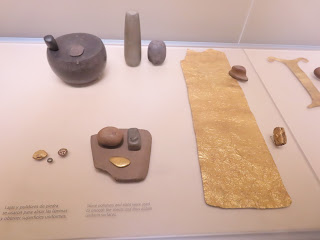 |
| Stones were used to smooth the gold |
 |
| A shell containing seven sheets of gold, one of the earlier finds in the museum |
More complex items have helped historians better understand the prehispanic society which lived in this region, called the Muisca. It helps us know that luxury objects were used to show dominance and connection to ‘other worlds’.
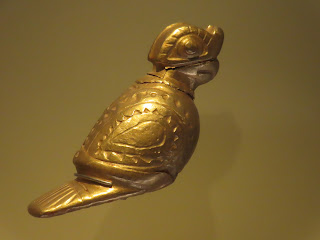 |
This is a poporo, a container with lime in it. They
were used when the Muisca chewed coca leaves. |
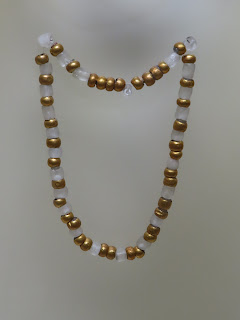 |
| Jewellery was a popular addition |
Those other worlds were seen by the Muisca as being ‘upper’ and ‘lower’, with humans occupying the middle, combined world. Birds were often associated with the upper world. The chief would cover themselves in gold in order to appropriate the powers of the sun.
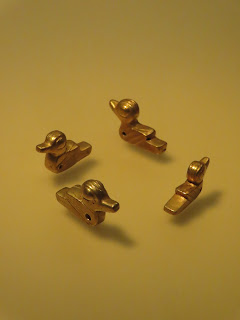 |
| Ducks = birds = higher power. Quackers. |
 |
| How the gold may have been worn on the head and body |
Of course, none of this was able to prepare the Muisca - or any of the Americas for that matter - for the European invasion in the 15th and 16th centuries, with their superior weaponry and deadly diseases. Spain first landed on modern-day Colombian territory in 1499 and established the New Kingdom of Granada, with Bogotá as its capital, by the middle of the 1500s.
 |
| The Spanish coat of arms, in the National Museum |
 |
| Spain created Bogota as their capital in 1538 |
The Spanish came and found the Muisca using copious amounts of gold. Excited by this, the conquistadors naturally wanted much of it for themselves. One of the places they were told the indigenous peoples used for gold was a lake now known as Guatavita, found about 60 km north of Bogotá.
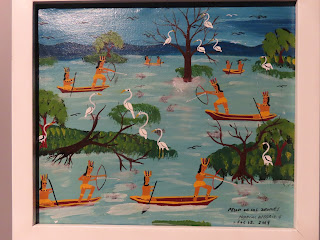 |
| An image depicting the Muisca using bodies of water |
 |
Notice the small gap on the left - this is called
El Boquete, which I'll explain later |
When I visited the lake the day after going to the Gold Museum, I learnt a bit more about the indigenous ceremonies. Potential successors to the chief had to go into a cave at age 9 and live there, out of view of the sun, for 9 years. When the time was right, these 18 year olds then had to sit in a house for 3 days and stare at a fire whilst the community’s most beautiful woman danced around him. Naked. If he survived that test, he kept his hair and could be a successor.
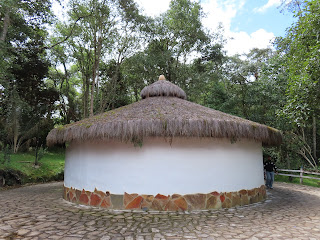 |
The next Muisca ‘king’ is always a nephew from the
sister’s side to ensure the bloodline is maintained |
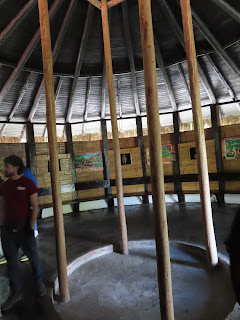 |
The fire would be in the middle, with
the distracting woman dancing around |
The Spanish didn’t care too much about that: they wanted gold. Luckily for them, the fact that the Muisca didn’t think they could touch the water helped them find a significant amount of gold pretty easily. When offering their gold to the gods, the local population would instead drop their gilded goods at the shallow edges of Lake Guatavita.
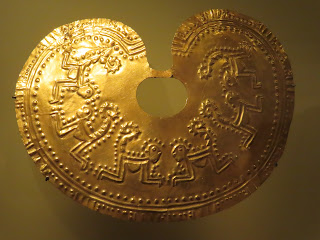 |
| Embossing gold was also popular |
 |
This is a Shaman, with his body shape
resembling a basket, to aid concentration |
The fact that so much gold was found at the edges of the lake made Europeans believe that there was far more in the deep. First the Spanish used workers, who were simply scooping water out using plates, to try to dredge the lake. Later, the British decided to use modern technology - TNT - to blow a hole into the side of the lake. The gap that emerged is known as El Boquete. There were some Brazilians on my trip; I learnt that ‘Boquete’ means something very different in Brazilian Portuguese…
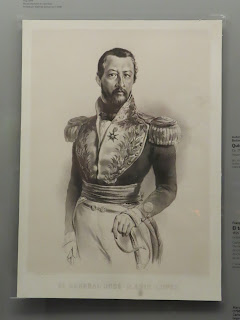 |
This man was responsible for a lot of the
early Spanish exploring of Guatavita |
 |
| 15 metres were dredged, leading to 70 tonnes of gold being found
|
Lake Guatavita is found in the High Andean Forest, which sits between 2800m and 3400m above sea level. The local way of dealing with high altitude is to drink coca leaf tea. Walking in this area offers incredible views.
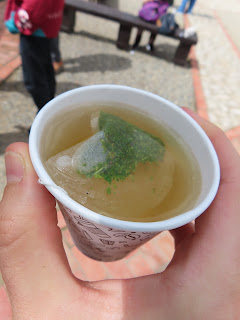 |
| Coca, not cocaine. Does look a bit like weed, mind... |
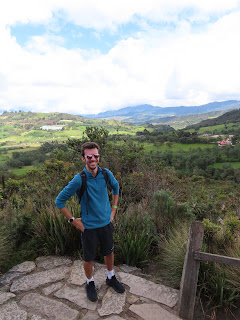 |
| Views for days |
The lake itself is stunning when the sun comes out. You can certainly sense the allure to foreign powers. The pictures below show its current level - remember that it was much higher before the TNT was used.
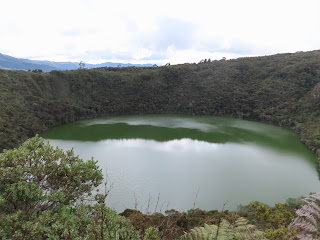 |
| The diameter is approximately 40 metres at its widest |
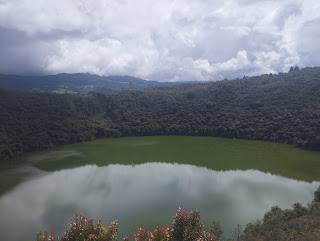 |
| The depth reaches about 30 metres |
Seeing the incredible collection of items in the Museo del Oro, and observing the lovely Lake Guatavita from up high, left me with some questions which won’t be able to be answered. What else was made by the Muisca? What items the Spanish melt down, rather than leave in its original, ornate shape? What has been lost to time? With all that in mind, it’s pretty incredible that so much has been preserved and can be shown off in Colombia’s capital city.
 |
A raft in the Gold Museum, created by the
Muiscas in the 14th or 15th century. Amazing skill! |
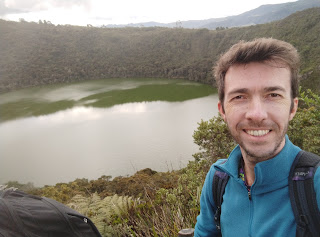 |
| Where the gold at? |
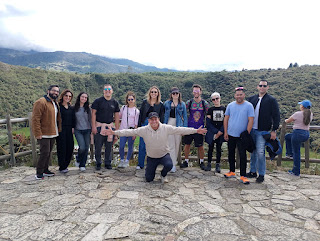 |
| We didn't find any gold |
Love you all,
Matt


