Tuesday, 25 February 2014

Morocco – Saharan stars

February 25-26

Hello everyone!

Quiz time. Grab a pen and paper.


Ready? Without thinking about it, write down the first five things you think of when I say the word...

AFRICA


Done? That was fast. Have a house point. Now I'm going to guess some of the words you wrote down. You may have written any of the following:

Safari

Poverty

Elephant

Mandela

Nile

How did I do? OK, I'll venture further and say that you wrote either the word 'SAHARA' or 'DESERT'. Hopefully you see where I'm going with this...


Morocco is a sizeable country, bigger than I expected, and one of the consequences of this is the dramatic changes that take place within its borders. Without (hopefully) needing to show your passport or cross a border, you can move from the Atlantic Ocean into the outer edge of the world's largest and most famous desert. With towering, snow-tipped mountains in the middle.


Ready for round two of the quiz? I know I am! Write down the first five words that you think of when I say...SAHARA. Off you go! Tick tock! Keep those answers for later, if you would. And please stop doodling a silly face and put your pen down, thank you.
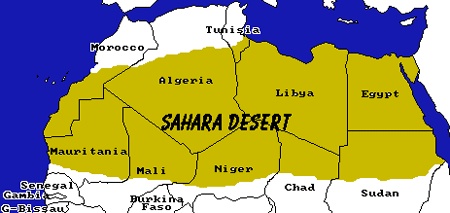

To get to the Sahara you must cross the Atlas mountain range, which spans from X to X and is the backbone of eastern Morocco. This part of the country is also the birthplace and home of Morocco's main tribe, the Berbers. A group of about twelve explorers packed into a minbus in the early morning to set off from Marrakech, with the intention of getting to the south-westerly town of Zagora in the mid-afternoon.


There is, however, much to admire within these two towns, most pertinently the stunning landscapes our bus, driven by a man called Mohamed with terrible teeth and arguably an even worse fashion sense, traversed across. A key aspect of the landscape is its ability to surprise; from the lush green fields to standing in snow atop a 2000+ metre mountain, it was very easy to forget our intended destination was a desert.


A quick word on the driving at this point: hairy. Take that to mean you won't have much left due to the stress caused by the constant weaving and daring overtaking manoeuvres accomplished just in the nick of time on the side of a steep, rocky cliff face. The picture below shows two lanes of vehicles moving in the same direction. Don't be fooled: cars were coming the other way. The overarching loads tiny trucks were struggling to haul over the Atlas range was simply terrifying. Don't even get me started on the poor donkeys...


We stopped in a couple of places of interest. One of these was an innocuous town called Ksar Aït Ben Haddou. This remote village only houses ten families, and they have lived within the kasbah – castle,  not the song by The Clash – for hundreds of years. The population was larger, but many families have opted to move to modernity. Our ruthlessly quick tour guide explained to us several times that the buildings were made of mud, straw and water: nothing else. The village is a fascinating sight when you consider that fact. Intriguingly this place has a synagogue, in addition to a mosque, as there used to be quite a large Jewish diaspora living here in centuries past.


The buildings and kasbah was interesting, but not the main reason for us being brought to the village. Ksar Aït Ben Haddou is no ordinary place, and extraordinary people come here to make extraordinary products. For Ksar Aït Ben Haddou is the host of Hollywood when it decides to shoot on location in northern Africa.


The list of movies shot here is impressive, and expanding all the time. The breakthrough film for the region was the classic Lawrence of Arabia, and more recent blockbusters such as Gladiator and the new Prince of Persia flick used this village and its kasbah as a film set. The erection of these elaborate sets is temporary, however, as you can see from the Gladiator Colosseum below. That is certainly not part of Berber Moroccan culture, and is thus dismantled upon the denouement of filming so that the village retains its authenticity as a symbol of Moroccan history.


We arrived into Zagora in the late afternoon, and were taken to our method of transport which was more suited to moving through the desert than a minibus. So, off into the Sahara we go. You may now retrieve your answer papers. Look back through those five words I asked you to list earlier. Did they include:

1. Hot?

2. Dry?

3. Sand?

4.Camel?

5. Big?

I'm going to go out on a limb and say that I got at least three correct. I'm also going to tell you that, though all undoubtedly true, they are also not all part of our Saharan experience. Particularly the 'hot' part.


After the guide shooed away the local begging children in what I assume is diplomatic in Morocco and not many other places – I can't imagine throwing stones at beggars in Prague – we were invited to sit on our camels. I couldn't help feeling sorry for the one-humped creatures; the way they were sitting, limbs cocked and folded beneath their bodies and necks tied tightly to rope and other camels, hardly seemed friendly. Yet they were able to express themselves in other ways. Hannah's camel was literally salivating at the prospect of her sitting on his back for an hour-and-a-half, and mine was wailing and howling at the thought of carrying me for that amount of time, in spite of my lack of weight. Maybe he wanted a challenge.


Thunder, as I called him in typically ironic fashion, nonetheless behaved himself for our journey. Any worry about damage to my manhood was also ill-advised: they don't move that quickly. Aside from stopping so the guides could pray, we bounced and lolled along, starting in sunlight and ending in complete darkness, save for the twinkling stars above. It seemed that the whole galaxy was out to amaze us. I have never seen so many stars in my life. In between was a lovely, light sunset, a faint wash of yellows and blues.


After beginning to question whether camels can see in the dark (my guess, based on them bumping into one another, is that they can't), we soldiered on over a dune to find a dim light shimmering in the distance. This was to be our campsite. Having erected a tent at dusk during our camping adventure in the summer, I was glad that the tents were already in place. They were set out in an arc around an open area for a fire, as you can see from the picture taken the following morning.


It would seem that this is the chance to tell you that the desert is not always hot. It makes sense, when you think logically. Burning with heat during the day, but with no clouds or prospect of a sea breeze at night to warm it, the temperature in the Sahara plummets as the sun disappears in the west.  Having initially packed for Morocco thinking of only sunshine, we thus had to take as many clothes as possible in our rucksacks in order to keep warm, especially as the fire wasn't lit for a long time.


After a mass serving of soup and tagine which caused a few digestive problems the following day (I'll spare you the details), we huddled quietly around the illuminating flames and listened to some traditional Berber drumming. Soon after I chose to shiver away from the fire; the compromise of gazing at worlds beyond ours was more than a fair compromise. A camera simply wouldn't do them justice.


We awoke for a lovely, pure sunrise which rose slowly over the distant mountains, before riding back to base on our camels. Any soreness in your back or legs which you experience on an initial camel journey is multiplied significantly the following day. Though the unique aspect of camel riding has gone the following day, the journey was thankfully shorter as we were collected in a different location.


The experience of sleeping in the desert was definitely worth the long drive through the mountains. Indeed, the mountains themselves are worth a visit in their own right. Morocco is blessed with some inspiring and truly diverse scenery. The brilliantly bright stars, watching down on the desert in their thousands, is a sight I hope I never forget.


Love you all


Matt

Sunday, 23 February 2014

Morocco – The chaos of Marrakech

February 21-24

Bonjour! Salam! HELLO!!

Can you hear me over the noise? The shouting match between rival minarets? The clanging and banging of metal pots and pans? The desperate cries from the street sellers? The strangled screams that apparently gets sold in CD form as Moroccan pop music?


All of that. Just from our rooftop terrace in a Marrakech side street.


That last blog, when I mentioned calm and quiet? Envisage that, then picture the opposite in your mind, and you may be part of the way to understanding the attack on your ears that is Marrakech as evening approaches.

Though it may initially assault your hearing, the buzz of the main square, called Jamaa El Fna, is friendly in its nature. The 'square' itself isn't really a regular shape, more an irregularly-shaped open space, and is boxed by a variety of cafés and shops on most of its sides. One side is very different from the rest, which I will talk about in greater detail later.


Marrakech, and this square in particular, has been the target of terrorist attacks previously. A bomb exploded here three years ago, taking seventeen lives. On the whole, the city feels rather safe, though obvious precautions such as protecting your pockets have to be taken. Though you should be aware of the potential for a scam, it is also important to remember that the vast majority of the local people are inquisitive and, if they are trying to sell you something, will do so in a genial and respectful manner.


During the day the open space is occupied by a variety of performers and artisans. Some, such as the female henna tattooists, are showcasing their skills and the culture of the region. Others, including the men who drag helpless monkeys around the square pushing for photos and dirhams, show a less comforting side of Morocco. Then there are the male dancers dressed as women; frankly, I don't know how to describe them. They may look like women, but you can tell from the hands. Always look at the hands and the Adam's apple...


Much of the noise during the daytime, aside from the background hum of vehicles and people, comes from the vast array of carriages selling orange juice. The word carriage is used for a reason here. Dozens of men, young and old, sell freshly squeezed orange juice from a stall on wheels reminiscent of a Victorian coach. The fact that there are so many stalls selling this most refreshing product – for a mere 4 dirhams, or 30p, no less – means that they have to use special tactics or tricks to get your attention. Most of them resort to hollering. Loudly.


As for the juice itself – simply amazing. Perfect to either refresh you after, or prepare you for, going into the souks.


Marrakech is famous for its souks. Depending on where you hail from or have travelled to, you may know these as bazaars or giant markets. Only the Grand Bazaar in Istanbul compares in size to the souk labyrinth that engulfs the main square in Marrakech. It is certainly not for the faint-hearted.


There are innumerable entrance and exit points. If you visit you will find it very difficult, nay impossible, to start and finish at the same place. That aforementioned other side of the main square is where most travellers will enter. This approach is a sea of metals, woods and fabrics, a rainbow of colour, and one entrance to a circulatory system almost as complex as your own.


It is much easier to show you the pictures rather than use words to explain the variety of goods available. As you can see below, just about anything can be procured!


It is best to leave yourself plenty of time to explore as many capillaries of the body of Marrakech as possible. Part of the joy of ambling aimlessly around the souk is finding that special shop which has something different to the rest, or a lovely and genuine owner who just wants to chat as much as sell you that decorative plate. Besides, trying to quickly navigate your way from top to bottom simply doesn't work; you'll only get yourself stressed.


You may believe that the souk is merely a collection, albeit a massive one, of shops. Not true, folks. Exploring certain areas of the labyrinth leads you to all kinds of workshops. From men tirelessly sanding their wood to give their spoons and boards to give them the smoothest finish, to young boys smiling as they smear dye over bone-dry leather, you can enjoyably spend most of your day marvelling at the care taken to produce the vast array of products.


The Marrakech souk, particularly in the evening, can become slightly overbearing, as this is rush hour. The clanging of pots and pans, the revving of motorbikes which inexplicably attempt to zip through the narrow alleys, the mass of movement and the gentle rolling of wheelbarrows and pushchairs can induce a sense of mild claustrophobia. We were caught in a slight crush when a moped and two pushchairs, each trying to pass one another, caused gridlock within our small artery close to the main square. It soon passed, but highlighted the potential problem of crushing and pickpocketing within the souk.


After losing yourself within the heart of the souk for a while, you'll inevitably be hungry. Luckily, Moroccan food is famed around the world for its distinctive flavours. The country's two most renowned dishes, couscous and tagine, are readily available at any café, shop or snack stand. I'm assuming you will know the former, so will briefly take time to explain the content of the latter. It consists of meat, potatoes cut into wedge shapes and the local available vegetables, all steamed or baked in the oven within a distinctive cone-shaped clay pot. Very good if you find a home-cooked one; fairly bland if you get one from the square. The lower two pictures after this paragraph will show you the difference between the two.


This leads me nicely into the most fun and raucous activity you will experience in Marrakech: the evening meal. I stated earlier that the Jamaa El Fna is a vast open space. It is...in daylight. As the sun begins to hide behind the minaret that looms to the east of the square, a transformation begins to occur. By the time the alluring call to prayer has finished blaring from the dusty red spire, the open space has changed into a mass of white in the form of tents. with light smoke billowing from within. Welcome to the food court.


The volume increases markedly as the owners of these pop-up restaurants cook whilst trying to convince you to eat at their stall, rather than the hundred or so other food joints. The measures they take to persuade you go far beyond the norm of just handing out a menu and saying 'nice price'. Each restaurant has a unique number, and the owners try to use this in the form of a snappy slogan in order to gain your custom. Examples include 'Number two: no diarrhoea for two years!' and 'Thirty-seven: cheaper than Ryanair!' They also use rivals' numbers to make you aware of their apparent flaws. 'Number seven won't take you to heaven' and 'twenty-eight, it's very late!' show the competitive nature of their business. Their brilliantly specific English is not limited to slogans. I was called Starvin' Marvin' a few times as we examined the stalls for one we wanted to eat at. You can use the competitiveness to your advantage. We were offered a free drink if we returned to #12; we were sat down two minutes later.


Many tents sell the same products but some, usually the ones packed with locals rather than tourists, offer distinctive Moroccan food. A bowl of what the French call 'escargots' went down very nicely, and the sheep head meat had more taste than the usual fare of tagine and couscous, which is bland here in comparison with the home-cooked version. However, you eat here more for the concept than the quality. It is something which may happen once a year in a Western city as part of a cultural event; here it is a daily occurrence, and people rely on the custom to survive.


Marrakech is a city of contrasts. Peace and tranquillity is often located around the corner from chaos and noise. The result is a place where you rarely feel uncomfortable or bored. Morocco's main tourist hub has yet to fully succumb to foreign cash and whims, and is all the better for it.


Love you all


Matt