Wednesday, 1 May 2019

Malawi – The Foot of the Magical Mountain

April 18-20

Hello everyone!

Malawi is quite a small country and I’ve travelled around most of its highlights. One yet to be seen, however, is its highest.

The Mulanje Massif

Tea fields with Mount Mulanje in the background


Mount Mulanje is tucked away in the southeastern corner of the Warm Heart of Africa. ‘Tucked away’ is probably the wrong phrase; after all, it soars to 3,002 metres above sea level. Then again, its upper reaches are indeed hidden behind fluffy white clouds.

Mulanje town is about an hour from Blantyre


The view of the Massif on the way to Mulanje town

We weren’t climbing to the peak of Sapitwa on this trip. That name is apparently from ‘sapitidwa’ - ‘the place you cannot reach’. It is supposed to be quite difficult to get to the peak and its views aren’t said to be any more special than others you see as you scale Mulanje. In fact, we hardly climbed it at all, instead content to observe the soaring rock as part of a stunning background.

There are many 'peaks' to scale near the top

The southern side is dominated by tea plantations

Mulanje has many stories and legends. The most interesting to me is the idea that JRR Tolkien climbed the mountain and used its surroundings as inspiration for The Hobbit. Though people think he visited Malawi, the story is unsubstantiated.

The 'Shire' river is nearby!


Malawi would get a lot more tourists if they marketed this as Hobbiton

Below the big rock, much of this land is tea country - one of Malawi’s main exports, some of which will probably have ended up in the brew you’re drinking at the moment. Verdant green bushes stretch for miles, all neatly cropped to hip height. Though a breathtaking sight, one can only imagine what natural beauty lay here before it was razed for tea cultivation.


Tea pickers, with the canopy being their base

What you see in these fields as you walk along the terracotta tracks are off-white canopies, with hessian sacks bobbing up and down nearby. Those sacks belong to the tea pickers, who spend their days hand-picking the leaves come rain or shine. In this particular area, they get paid 1500 Malawian kwacha - $2 - a day.

Workers collect leaves and fill their sack


This man asked for a picture, then laughed when he saw it

This particular area is close to the Mozambican border, away from the relative hustle and bustle of Mulanje town. Driving from the major city of Blantyre doesn’t take too long, and is a spectacular journey as the granite massif looms ever larger from your car. Judging from some of the driving we saw, it may be quite the distraction, though I think the swerving of many saloon cars may have been down to what the drivers were drinking.

Cycling without a helmet on a 'motorway': suicidal

Cycling is the way many get around - this bike belongs to a tea
picker. Not sure how they'll remember where it is...

The incredible panorama is partly due to the sheer steepness of the mountain - many of the towns at its base are over 2 kilometres lower. It probably makes for some steep hiking - I’ve read that reaching the top is a 3 day return trip. Unless you do the Porters Race, a famous half-marathon up and down the mountain which happens every July. Friends who have done it have equated it to a marathon because of the sheer incline.

We walked the beginning of the 'Skyline Loop'

It's a long walk to the top

I imagine it is a place I would visit regularly if I lived in Blantyre. Coming from Lilongwe, it’s likely to be a six-hour journey each way. I am confident that I’ll be back to climb - though probably not run up - Mount Mulanje in the future. For now, I’m more than content to gaze up at the big rock from the vivid tea-studded landscape below.

Acacia trees are currently in bloom across Malawi


I hope I'll be back to do the big climb in the future!


Mulanje


Love you all,

Matt

Saturday, 27 April 2019

Malawi - Lovely Liwonde

April 16-18

Hello everyone!

To kick off our latest Malawian travelling adventure, we went to arguably my favourite place in the country: Liwonde National Park.

One of many, many elephants seen at Liwonde National Park

The herd of 60 elephants seen from our boat

Unlike Hannah and her family, who I am with, I have been here once before. I had a magical time with my parents when we came in June 2017.

The drive, at about 5 hours, is longer than it looks on this map


Mum and Dad's visit in June 2017

We saw many elephants up close

You may assume it would be more of the same but much has changed in those two years. A company called African Parks are helping to restore the park to its former glory, before neglect and poaching took such a negative effect after the 1970s.

Hippo numbers are on the rise


A colourful caribou stalk


Between the two visits, lions were moved up from Majete. We didn’t spot them, though we saw footprints. They aren’t the first set of cats to move to Liwonde, either. Shortly before I visited with my mum and dad, four cheetahs were relocated from South Africa. We didn’t see them at that time. Bit different this time…

Cheetahs in Liwonde National Park


Nine cheetahs in total were relocated during that period, and many more have been born since. They quite like hanging out near the luxury camp, Mvuu, where we were staying.

This cheetah was less than a 5 minute drive from camp


The evening before, we had witnessed the end of them taking down an impala. Other impala seemed confused, calling out to their fallen brethren.

Three cheetahs were in the bush with the stricken impala


The impact of predators arriving to Liwonde was something I was fascinated about. Last time I enjoyed watching warthogs pottering about without a care in the world. We were told that the behaviour of various prey has changed since the big cats arrived; one example was that the herds of waterbuck and impala now tend to stick together for protection.

The impala were very concerned about their friend


The other difference to last time is the time of year. This is the back end of the ‘green season’ - code for rain. A short, sharp storm just as we were about to board our wooden boat was a reminder of the power of the rain.

A gorgeous sunset over the Shire river


Green season is often cheaper than other times in the year, partly due to the difficulty of accessing much of the park but also the volume of rain gives animals more places to drink. The consequence of that is supposedly they are less likely to come to the river.

Moody skies towards Lake Malombe


A monitor lizard found far away from the river


Obviously some animals will always be near the river, such as hippos and crocodiles.

Still one my favourite animals


This croc was next to another which was about 6 metres long but hidden


Similarly, many birds rely on the river for food, so bee-eaters, stalks and kingfishers are omnipresent. The fish eagles are particularly majestic when perched on the branches.

A beautiful bee-eater


A fish eagle perched proudly on a branch


My highlight last time was seeing the elephants drinking at the Shire river. Similarly, Liwonde didn’t disappoint this time either.

A herd of elephants on the bank of the river


On our final morning boat ride, we coasted into the marshes beside approximately 60 - yes, sixty - elephants of all ages. Babies were flopping in the water, teenagers were wrestling with one another, mothers and fathers were chomping on the reeds. The swishing noise was incredibly relaxing. The experience was truly special.

Babies playing in the water


We saw some elephants inland as well. Some got quite close to us…

This elephant crossed less than 10 metres ahead of us


There is the potential for Liwonde to get even better. Our excellent guide Duncan told us that there are plans afoot to bring leopards and giraffe into the national park in the near future. For now, I can confirm that this is my favourite place in Malawi, and one which always seems to create magical memories.


Love you all,

Matt

Sunday, 14 April 2019

Malawi – The Big Smoke in the South


April 2-5

Hello everyone!

I live in Lilongwe, the capital of and biggest city in Malawi. Though it has been capital since 1975, it has only recently become the most populated city. For a long period of this country’s existence, that honour was bestowed upon the main city in the southern region of the country: Blantyre.

Downtown Blantyre, as seen from the new Amaryllis Hotel

21 Grill - a tradition for each Blantyre visit
  
I’ve actually been to Blantyre many times but have never felt the urge to write about it. Partly it’s because there isn’t too much to actually do in the city. It is Malawi’s financial centre and not a place you would be desperate to visit if you came to the country.

Many banks have their offices in Blantyre

One visit was to support Hannah in the Malawi Open, where she got to the semi-finals
  
More than that, however, is the fact that I’ve generally been to Blantyre with school. There are three large international schools here (ours is really the only one in Lilongwe), meaning that most sports competitions will take place in Malawi’s second city. Spending almost all time looking after children who are 10 or 11 years old, and attempting to get them to play rugby, leaves little time to explore and enjoy the surroundings.

The two cities are connected by the M1, Malawi's main motorway - one lane in each direction...

Mandala House is Blantyre's oldest building
  
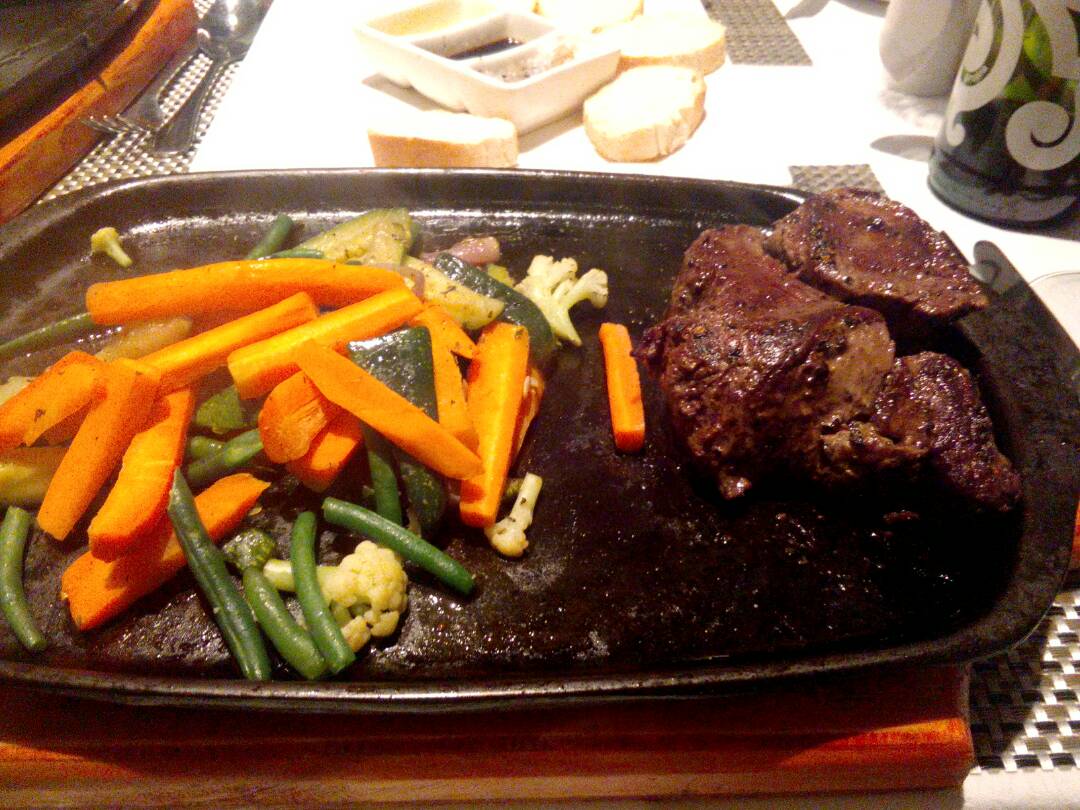
Being Malawi’s financial capital and hosting a surprisingly large expat community has resulted in Blantyre having many international amenities. There are several good restaurants, with the crème being 21 Grill. Though the food was a bit disappointing on my most recent visit, it is generally the best place to get a steak in Malawi. It is a fancy place – they even have a dress code…

My favourite is the Jack Daniels steak, which is lit on fire
at your table before being served. Sucker for pyrotechnics...

The interior of 21 Grill contains a tree and
many books from Reader's Digest
  
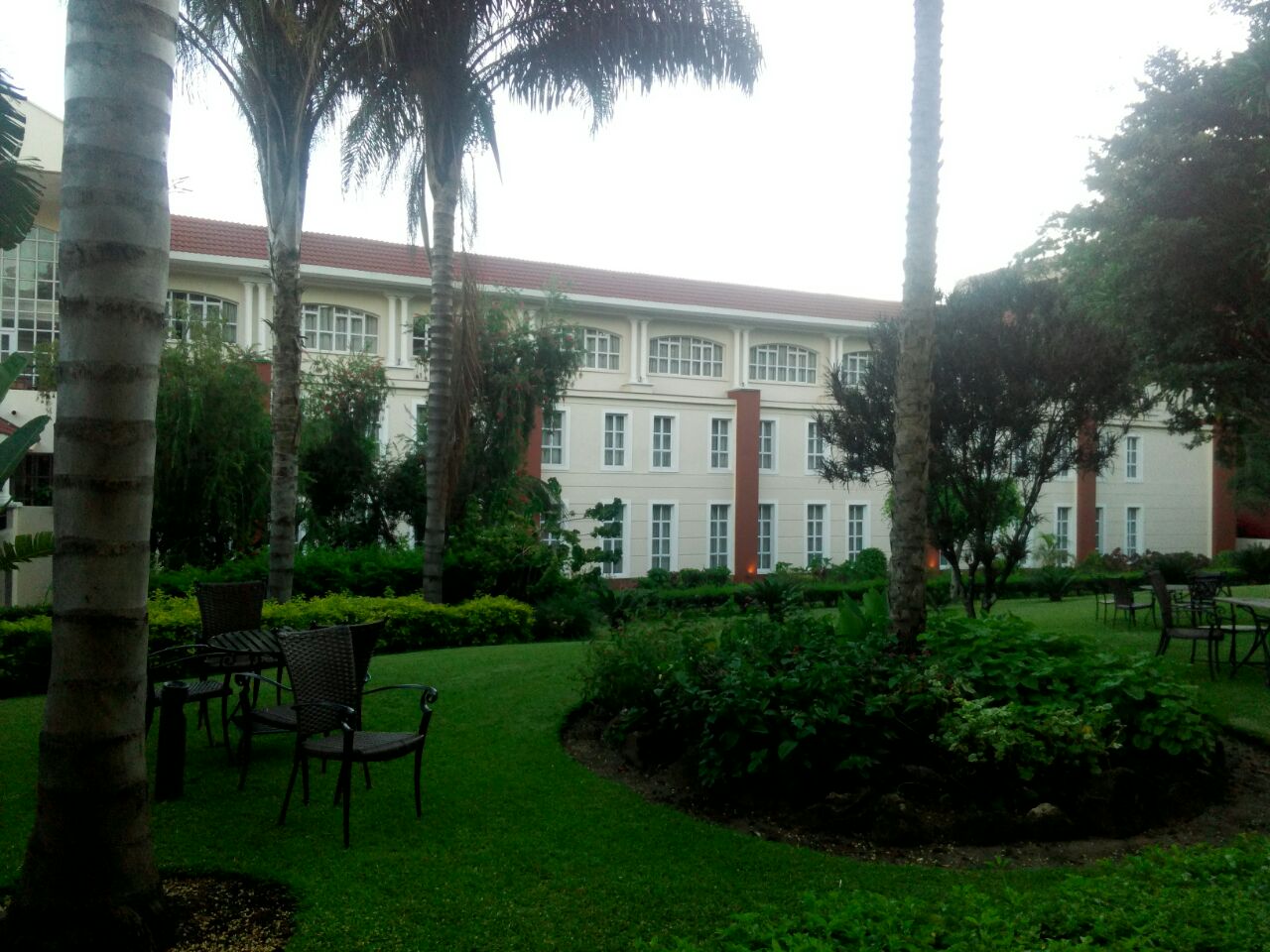
21 Grill is in the complex of Ryalls, an extortionately-priced hotel. It is a nice setting but not worth the cost of a room.

The gardens of Ryalls

The hotel has a swimming pool - this is me celebrating
finishing part 1 of a training course next to it
  
Blantyre’s setting is quite pleasant, sitting between a triangle of hills. It is easy to see why missionaries set up a base here in 1876.

Internet image of Blantyre

One of the hills is called Soche - rumour has it that it was renamed
after an upmarket hotel, from which you could see the hill...
  
There are some differences between Blantyre and Lilongwe. Blantyre’s outer regions seems greener, a reflection of the landscape and how the rain falls during the rainy season. Blantyre also feels more like a city – there is an obvious centre, the financial district, which is compact and has a complex one-way system.

View from above of the area just north of Blantyre

Blantyre also has had a dual carriageway for a
while - Lilongwe has just had one built!
  
There are also many similarities which you won’t see elsewhere in Malawi. The international supermarkets and fast food chains, such as Food Lovers and KFC. The airports which get more than one plane a day. The intoxicating traffic. Both have a President’s Palace – I didn’t realise Blantyre had one until accidentally running up to it on my most recent visit. The security guards didn’t seem convinced by my naivety, warning me to, “Never do this again. Never.”

Chichiri Mall used to be the largest in Malawi

Blantyre's runway has many cracks in it - they're
actually closing it in May for 2 months
  
As more investment and infrastructure is poured into the capital, I wonder what will happen to Blantyre in the future. At the moment Lilongwe seems to be ‘first among equals’, though there is still lots of construction in the second city. The hotel I was at for a training course, the Amaryllis, is an example of that.

There are quite a few slums visible on the way out of Blantyre

The food at the new Amaryllis Hotel was sensational
  
Blantyre is a useful location for someone travelling around Malawi. It is a good place to stock up on supplies, enjoy a different cuisine if you are fed up of nsima, and a pleasant and busy enough city to spend a day in before heading to more exciting or exotic destination, whether that is north to Lake Malawi, south to the Satemwa Tea Estates or Majete National Park, or east to Mount Mulanje.

Blantyre Sports Club has an interesting 9 hole golf course

Love you all

Matt