October 26-28
Hello everyone!
From one colonial town to another on our Nicaragua trip. Next stop: Granada!
 |
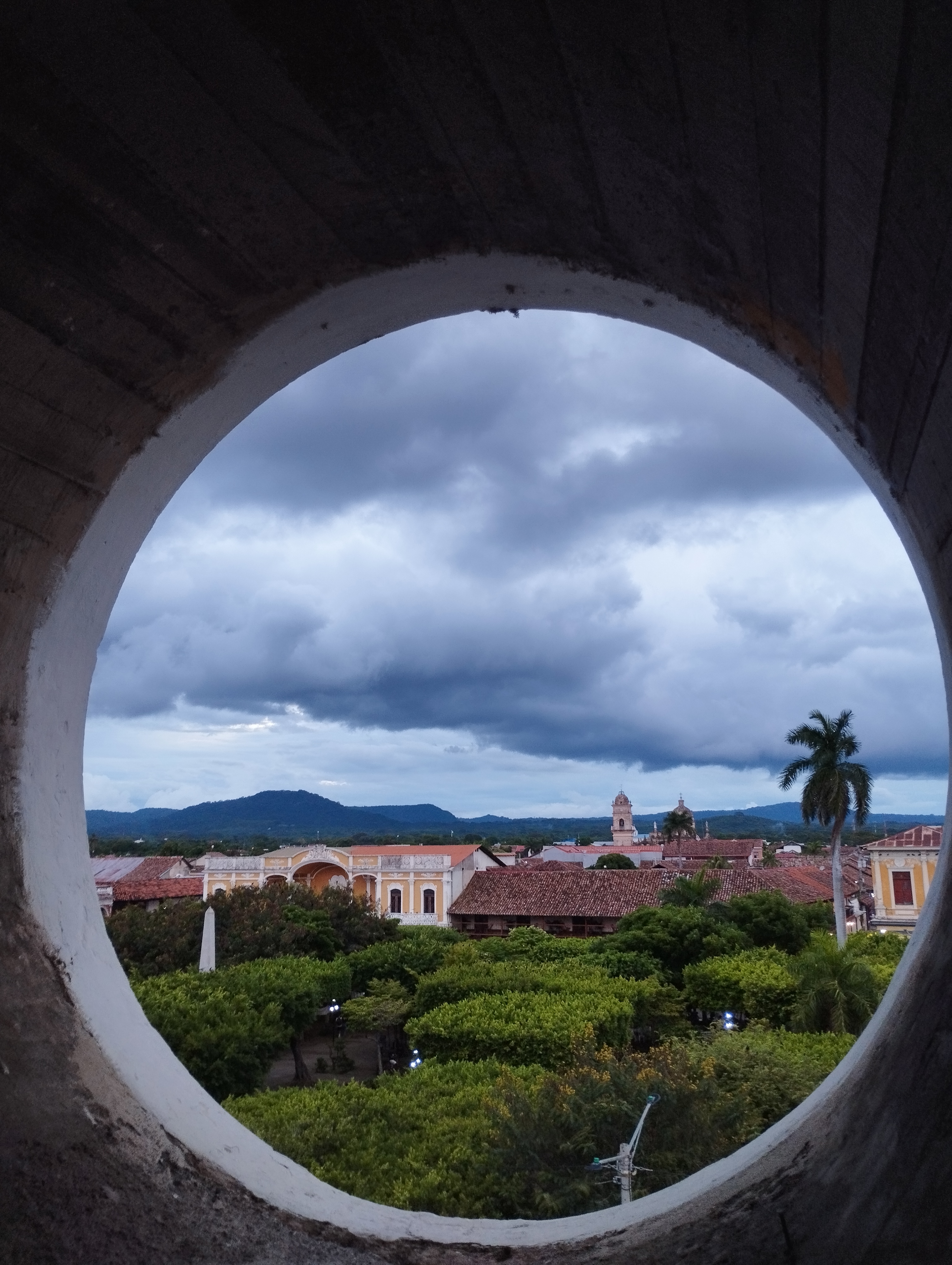
| View from Granada Cathedral |
 |
| This is Nicaragua's sixth-largest city |
As I alluded to in a previous post, these two cities were colonial powerhouses back in the day and possess many similarities. Like León, Granada is named after a strong medieval Spanish stronghold. Unlike Spanish León, I have been to the more famous Granada and its Alhambra Palace.
 |
| The Municipal Palace in Granada |
 |
| The city's nickname - La Gran Sultana - is a reference to the Spanish city |
Granada in Nicaragua doesn’t have anything remotely like this. That’s likely to be connected to the fact that the Alhambra Palace is an Islamic creation, a religion which never took hold in the Americas. Instead, like León, Granada has a cathedral and churches. Lots of them.
 |
View from Iglesia de la Merced - the Cathedral
and Lake Nicaragua are in the distance |
 |
Iglesia Xalteva - Xalteva was the pre-Columbian
name for the settlement here |
Like its western rival, Granada (the Nica version) was founded in 1524. Like León, it was founded by Francisco Hernandez de Cordoba. Granada was technically created first. The owner of our hotel, whilst giving me a whistle-stop driving tour of Granada, seemed keen to make this point.
 |
| Our peaceful hotel, Arca de Noe |
 |
| I was in a car, rather than being driven by a horse! |
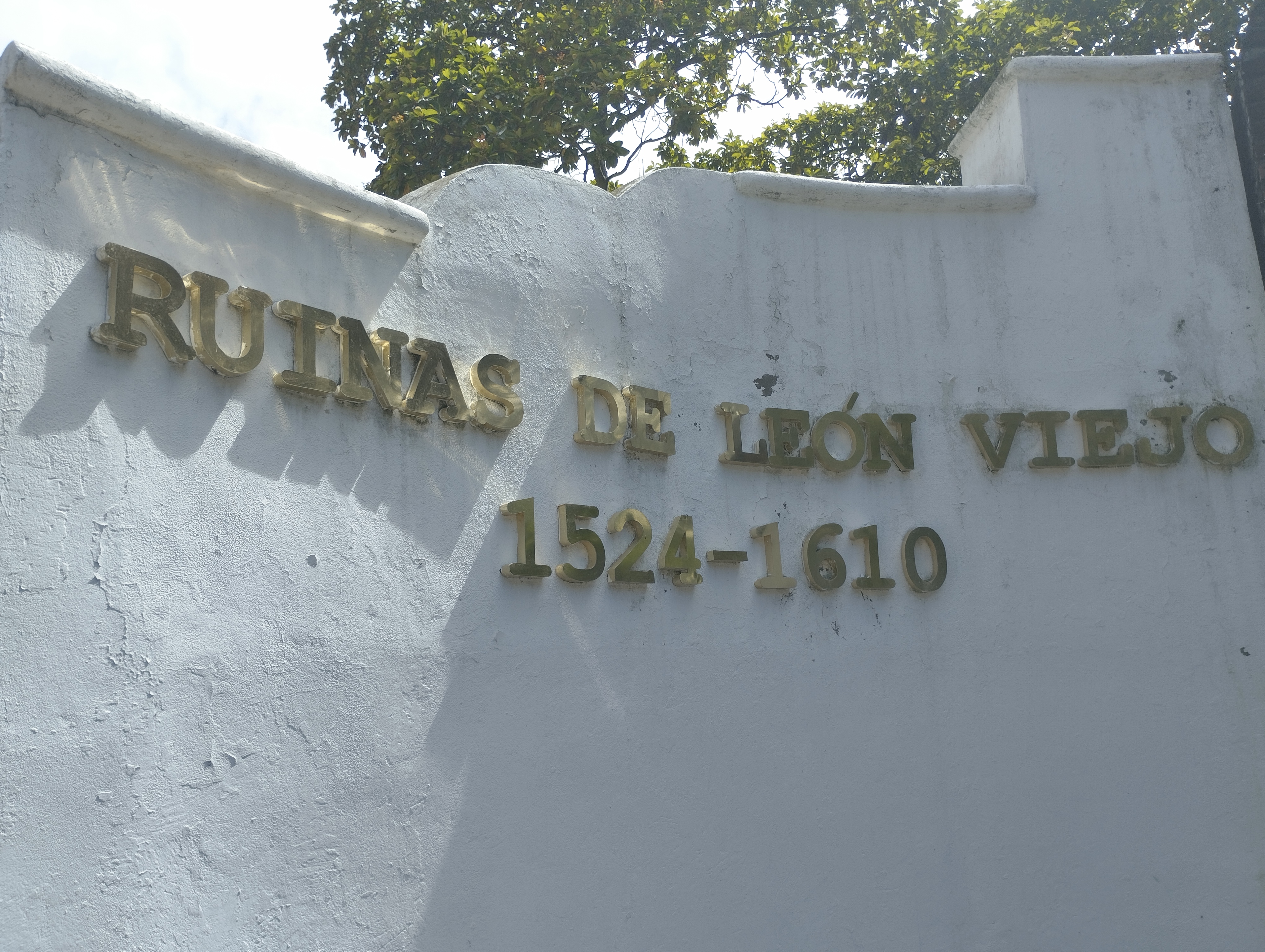
One key difference is location. As I learnt when visiting the ruins of León Viejo, that city was initially built on the shore of a lake. Granada was also built on the shores of a lake. A different lake, though: Lake Nicaragua, the largest lake in Central America.
 |
| The lake is also known as 'The Sweet Sea' |
 |
| I went for a run along the lakeshore one morning |
The reason for this was that it helped the Spanish to have a major port on the western side of the lake to connect across the lake to the main river, the Rio San Juan. That river then gives them access to the Caribbean Sea, and therefore Europe. No Panama Canal at this time, remember. This helped the Spanish consolidate and grow in the region, making Granada an important city.
 |
| Volcan Mombacho is found to the south of the city |
 |
| The front of Iglesia de la Merced |
Even after the Spanish reneged power in 1821, Granada played an important role in global migration. According to my driver, it became a major player during the US gold rush in the late 1840s. With a lack of rail infrastructure in the western United States at the time, people from eastern cities such as New York who wanted to find their riches needed another way. The obvious route was a steamboat…which had to go all the way round the American continent, below Argentina. Cornelius Vanderbilt, a famous American businessman, established an operation to transport people from New York City to San Francisco via Granada, using the Rio San Juan and Lake Nicaragua. It saved months of travel time. Apparently, over 258,000 Americans used the route in a 20 year period.
 |
Either this fish is a fascinating art piece
depicting ocean pollution...or is being used as a bin |
 |
| I saw a beautiful rainbow during my run |
By the time of Vanderbilt’s operation, Granada was actually at war with…you’ve guessed it, León! It wasn’t its first time to be attacked. It was sacked successfully seven times by pirates connected to the English, French and Dutch. The most famous was actually Welsh: Captain Morgan, off of rum fame, looted the city in 1665.
 |
The main boulevard from the Cathedral to the lakeshore,
which has many restaurants and cafes |
 |
| Some people buy food from the market, other get it from this! |
My driver said the León vs Granada ‘civil war’ started in 1838. I can’t find evidence to support that, but the two cities were sharing the right to be capital of newly-formed Nicaragua at that time. What - or who - ends up bringing them together is an American mercenary called William Walker. I knew of him from my Costa Rica trip, but he was much more prominent in Nicaragua. After all, he - an American - became the country’s second president!
 |
| These blogs don't write themselves! |
 |
The fort in Granada - far away from the
lakeshore, and probably not very effective |
To summarise a complex story, Walker offered to help León in 1855 by providing military forces. He initially helped them to better Granada but then betrayed them by establishing the latter as his new capital. He also made himself president, then…tried to legalise slavery. Bad move. Costa Rican troops invaded to help Nicaragua remove Walker, who left in May 1857.
 |
| The Sun set on Walker's dream in 1857 |
 |
| A monument in Independence Square |
Not before ruining Granada, however. In 1856 Walker and his troops systematically burnt the city to the ground using tar. The fires lasted for three days. The cathedral got special treatment, being filled with gunpowder before being detonated to rubble. Infamously, Walker left a sign saying ‘Granada was here’ before departing. Very few elements of this colonial city therefore actually existed during the colonial period.
 |
| The most recent version of the Cathedral was built in 1915 |
 |
| This part of the Merced is original, dating from 1534 |
I’m focusing more on history here because we didn’t actually do that much in Granada. One of our two full days was spent nearby in Masaya, and the main options of things to do around Granada (volcano hiking, going on the lake) were going to be done elsewhere on our trip. We did enjoy Granada’s reputation for excellent food, however!
 |
| Middle Eastern mix plate from Pita Pita |
 |
| Steak from El Zaguan |
 |
| A 'banana burger' from Tostometro - the bun is fried plantains |
I spent much of my time in Granada trying to avoid comparing it to León. We liked both and appreciated their subtle differences: Granada seemed slightly more spread out, for example. Though intricately interconnected, both colonial cities are beautiful in their own right. We found it a nice place to relax, as well as being a good base from which to head to see some interesting things to the west…
 |
| The view from the Cathedral is stunning |
 |
| Better people than William Walker |